
SOUTHEND ON SEA’s BRAND NEW FIRE ENGINE ‘THE ALERT’ & THE PETER BOAT INN
In late Victorian times Southend was growing rapidly both in size and population. No longer was it described just as the south end of Prittlewell, administered by a local board of governors. Demands for the town to be incorporated as a municipal borough with its own mayor and elected councillors became more vocal. The first steps taken to achieve this goal began in September 1890 with a meeting at the Victoria Coffee Palace. Twenty-three members of a new local board, both men and women, were appointed. An incorporation committee was then formed to draft a town charter. This was submitted to Lords of the Privy Council and in August 1892 Queen Victoria approved the draft whilst staying at Osbourne House on the Isle of Wight. The new charter was duly signed, dated and brought to Southend. A local public holiday was declared in Southend on 11th August 1892.
The establishment of the municipal authority brought with it many new responsibilities. With an increasing population and new buildings quickly taking shape, Southend recognised that its fire service needed to be updated. Many considered the existing fire appliances inadequate. So far, the town and district had been fortunate in that it had escaped major conflagrations such as had engulfed many other towns.
Yet, it was not just good fortune that had kept major fires away from Southend. Despite the obsolescence of much the existing firefighting apparatus, much credit for fire control and prevention was given to the existing volunteer fire brigade led by commander Captain Henry (‘Harry’) Garon and Lieutenant Berry for running a very efficient fighting team.
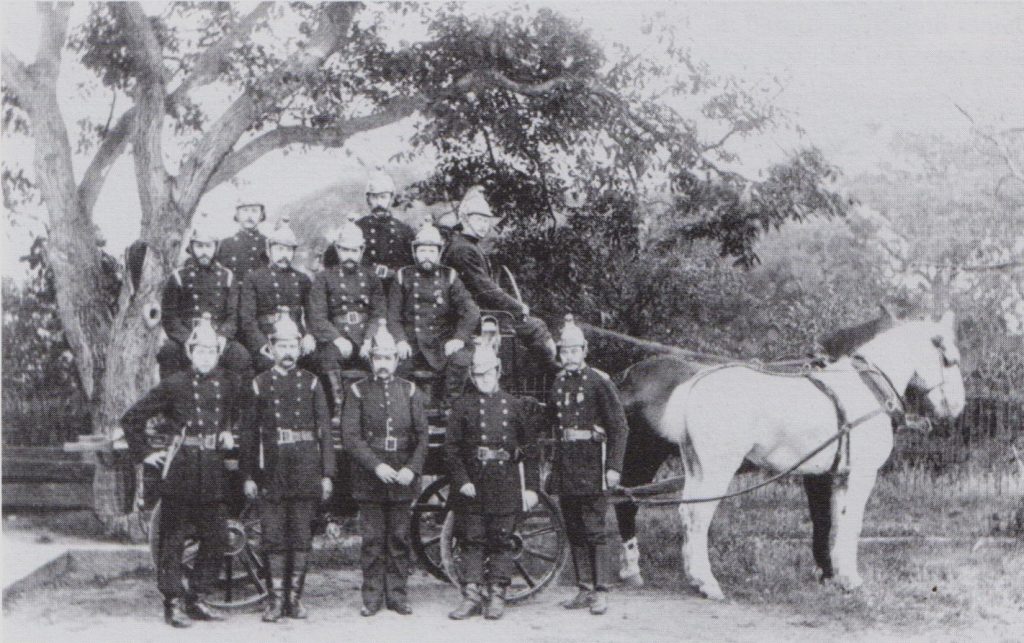
Southend Fire Brigade mustered in 1891, a year before the arrival of their new machine ‘The Alert’. Captain Henry Garon second from the left on bottom row.
Nevertheless, it was Captain Garon who proposed the purchase of a new steam fire engine. He also suggested it should be paid for by public subscription. After much deliberation, the scheme was deemed feasible, the funds raised and instructions were passed to Messrs Shand Mason and Company, the noted fire engine makers of Blackfriars Road, London.
Southend took delivery of its new horse drawn steam powered fire engine in September 1892. The machine was a no. 1 size ‘Double Vertical’ pattern costing £300.00. For its day, the new steam fire engine was state of the art. The engine had a capacity of 260 gallons per minute and could draw water independently, whether salty, dirty or fresh, from external sources.
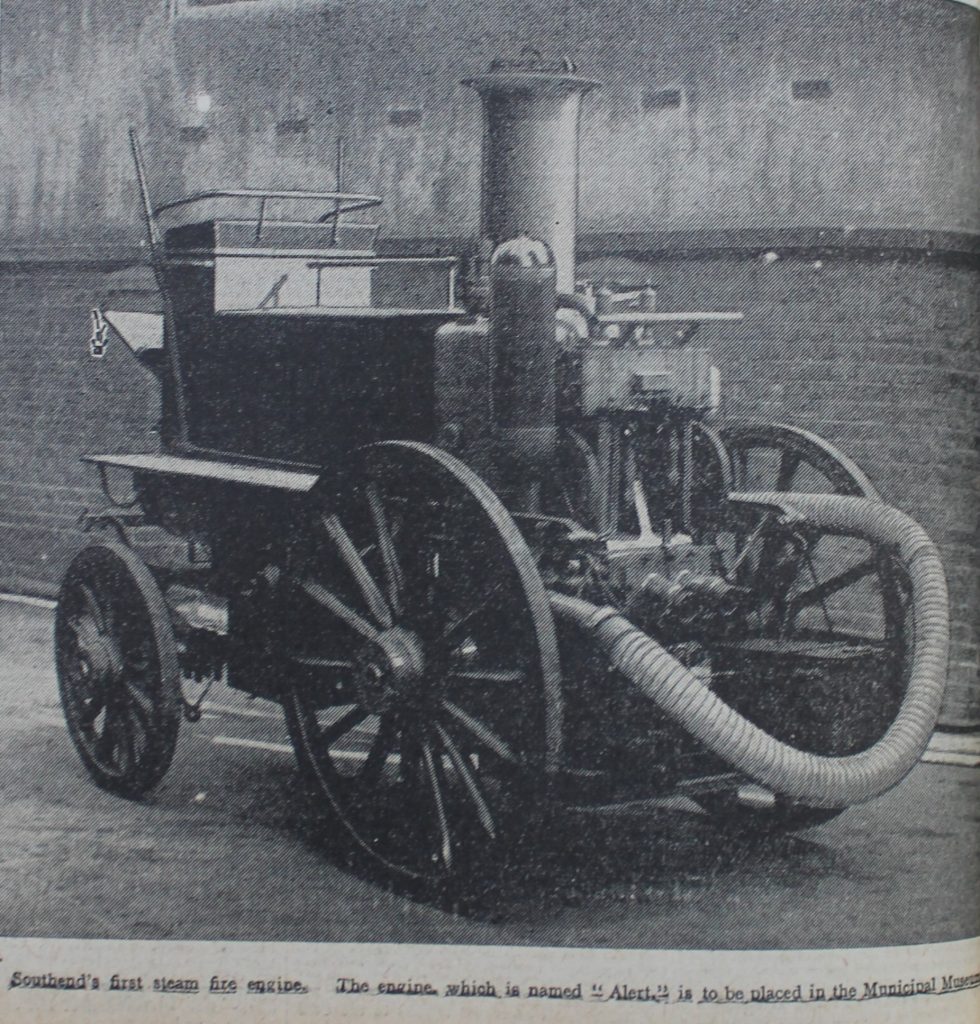
On Saturday 26th September a final public test of the new engine took place on the green opposite the Ship Hotel (close to where the Kursaal stands today). There followed a public presentation in front of a large crowd followed by the official ‘christening’. Civic dignitaries attending included Mr John H. Burrows (Chairman of the local board), Thomas Dowsett, who was soon to be mayor, his wife Eliza and Captain Garon. They were joined by a full muster of the fire brigade and representatives from the manufactures. A brass band was also in attendance.
Mrs Eliza Dowsett, standing at the head of the engine, cracked a bottle of wine on the machine and said ‘she was honoured to have this duty conferred upon her’. She continued, ‘I have great pleasure in naming this fire engine Alert’. She recalled when Southend was granted its municipal status the month before, she had witnessed the parade marching down the High Street on Charter Day to celebrate the occasion. She was filled with pride. The parade included the volunteer fire brigade. Mrs Dowsett said ‘they represent those who will go out at a moment’s notice, no matter whatever risk to their own lives, to help their fellow Southenders in times of distress’. She also congratulated Captain Garon and his team for their noble efforts in helping to raise the funds needed and for the detailed work required to procure the steam fire engine.
Meanwhile the demonstration of the new machine proceeded. The boiler was fired up. Two lengths of hose were run out with nozzles affixed and streams of water were soon gushing up into the air that reached a height of some 150 feet.
With the onlookers cheering wildly and a brass band playing in front of the hotel, Mr John H. Burrows stepped up and gave a short speech. Captain Garon then offered his thanks to the chairman, but by that time the noise of the engine and the strains of the brass band all but drowned out the voices of the two speakers.
The proceedings then terminated and firemen were invited by Mr W. Trigg, the proprietor of the Ship Hotel, to take the dinner which had been put on to celebrate the event.
Four Days Later, the first shout.
At 11pm on Sunday September 30th 1892 a serious fire broke out at the Peterboat Inn located in the High Street, Leigh-on-Sea. Just before, Mr Frank Morgan, the innkeeper, was in the parlour chatting with Mr Scott, his brother-in-law. Mrs Morgan, the wife of the innkeeper, had already retired with their child. As Mr Morgan closed up, he picked up a paraffin lamp to extinguish it, but in doing so the lamp’s bottom fell out and blazing oil spilled all over wooden floor. Immediately the parlour was in flames. Mr Scott ran out to raise the alarm whilst Mr Morgan raced up the stairs in an attempt to rescue his wife and child, only to find his way barred by the rapidly spreading fire. He then jumped out of a window and climbed up the back staircase, punched a hole in the match-boarded wall and fortunately managed to rescue his wife and child unharmed.
Seeing the Peterboat aflame, several local fishermen rushed to help. They set up a chain of buckets to collect sea water. However, the tide was out and despite their best efforts the fire spread. It soon became apparent that efforts to put out the fire or even stop it spreading were in vain.
In the absence of telephones, just after 11.30pm, Arthur Brewer who lived a few doors away from the Peterboat leapt on a horse and galloped bare-back as fast as he could to Southend to summon the fire engine. Mr Brewer returned within half an hour (no mean feat in the dark) and reported that the fire engine would be on its way as soon as a team of horses was hitched*. Mr Brewer added also that he had been stopped en-route by a police constable who enquired what all the rush was about.
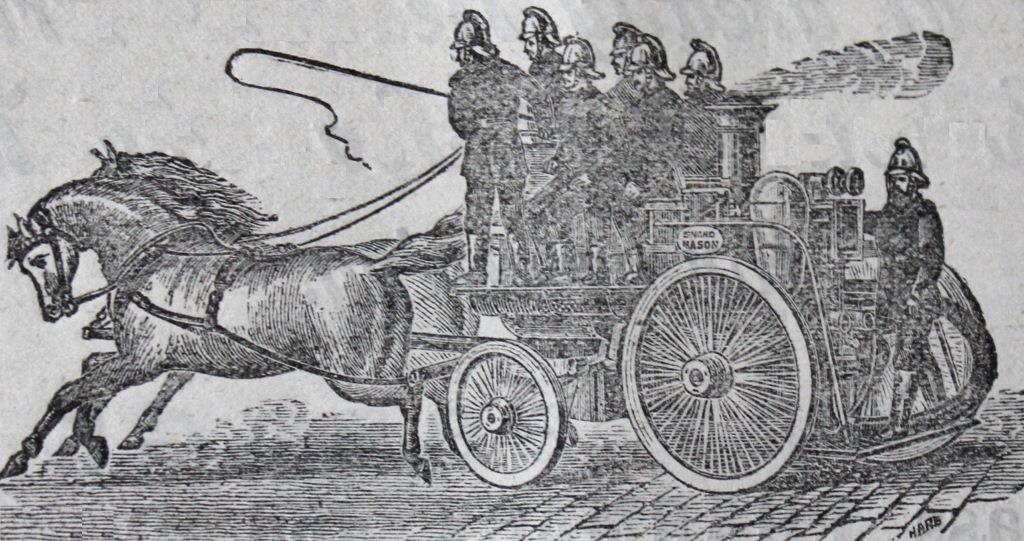
The Alert to the Rescue
The Alert arrived at 30 minutes after midnight and was taken down to the Strand, where there were many willing hands giving confusing directions. The heavy machine became stuck in the mud. However, planks were soon laid and with a huge collective effort the engine was dragged out and set to work. In the meantime other fishermen dammed the creek to provide water to service the pump.
By this time though, the Peterboat Inn and the neighbouring Red House were completely destroyed. Also just before the fire brigade arrived there was panic when a series of multiple bangs were heard as loaded shotguns exploded in the adjacent Carey’s Cottage which was also burnt down.
The Fire Brigade stayed all night damping down the ruins and departed at 6.15am on the Monday morning. Captain Garon and his men returned to base with a plum pudding given as a souvenir from the inn. It was not uncommon for residents to supply the firefighters with refreshments or even a slap up supper afterwards. Thankfully there was no loss of life resulting from the fire at the Peterboat. However, the insurance bills were huge and Mr Barnard who owned the Red House lost several valuable paintings.
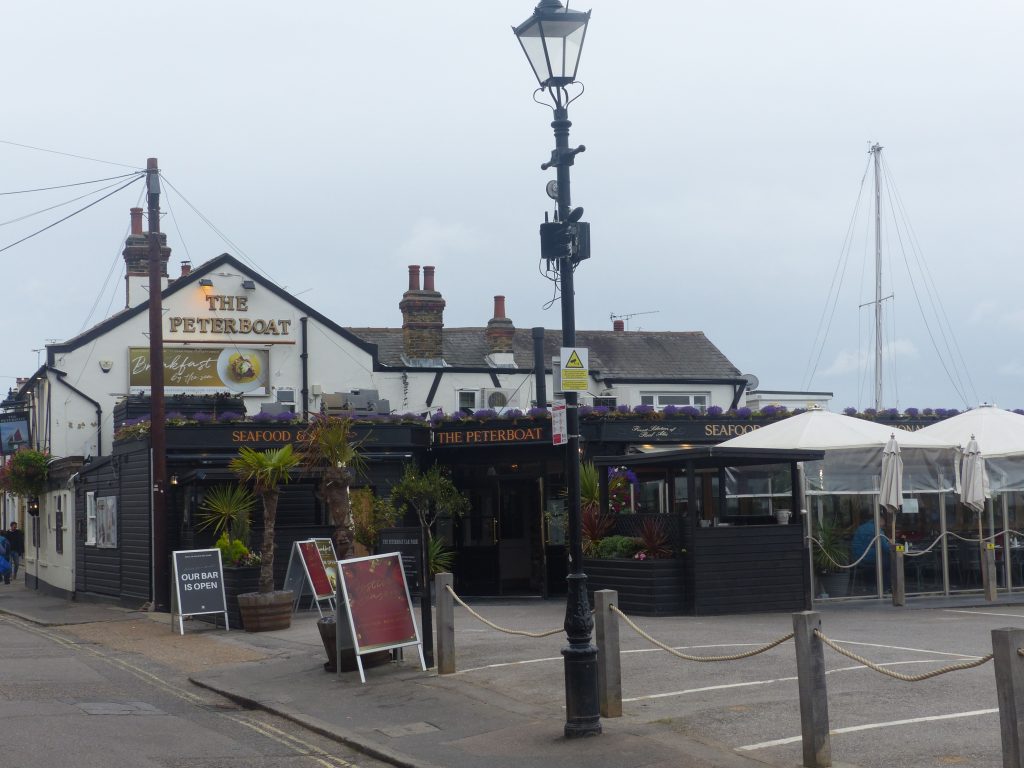
As we know the Peterboat Inn was later rebuilt and still stands today.
We don’t know how long the Alert stayed in service with the Southend Fire Brigade. Yet, we do know Southend acquired a new petrol driven Hatfield fire engine in 1912. It was recorded in the Southend Pictorial of February 1934, that the Alert was due to be given to Southend Museum. However, today Southend Museum no longer has the Alert in its collections. Whether the Alert ever arrived at the museum or whether in later years the museum disposed of it remains a mystery.
Extracted from the New Essex Hundred Histories to be published early 2027
More details soon.
©Essex Hundred Publications


